Climate Risk Insights
Physical climate risk: a primer
Max Girkins
7 days ago
- Estimated reading time: 8 minutes
Physical climate risks now represent a non-negligible drag on the global economy, with annual losses from acute events alone surpassing $320 billion in 2024. These risks manifest in two distinct timeframes: acute shocks such as devastating wildfires, and chronic stressors like rising sea levels. The impacts of these risks on physical, human, and natural capital will define the global economy going forward. To add to that challenge, systemic risk dynamics reduce the efficacy of conventional modelling approaches and require particular care when assessing physical climate risk’s impacts on businesses.
Acute risks
Risks from increased frequency and severity of extreme weather events are called acute risks. These include floods, wildfires, storms, and cold snaps. The key to acute risks is that although all these risks were present before climate change, the increasing frequency and severity makes them harder to predict, harder to mitigate and therefore more damaging to economy.
Flooding
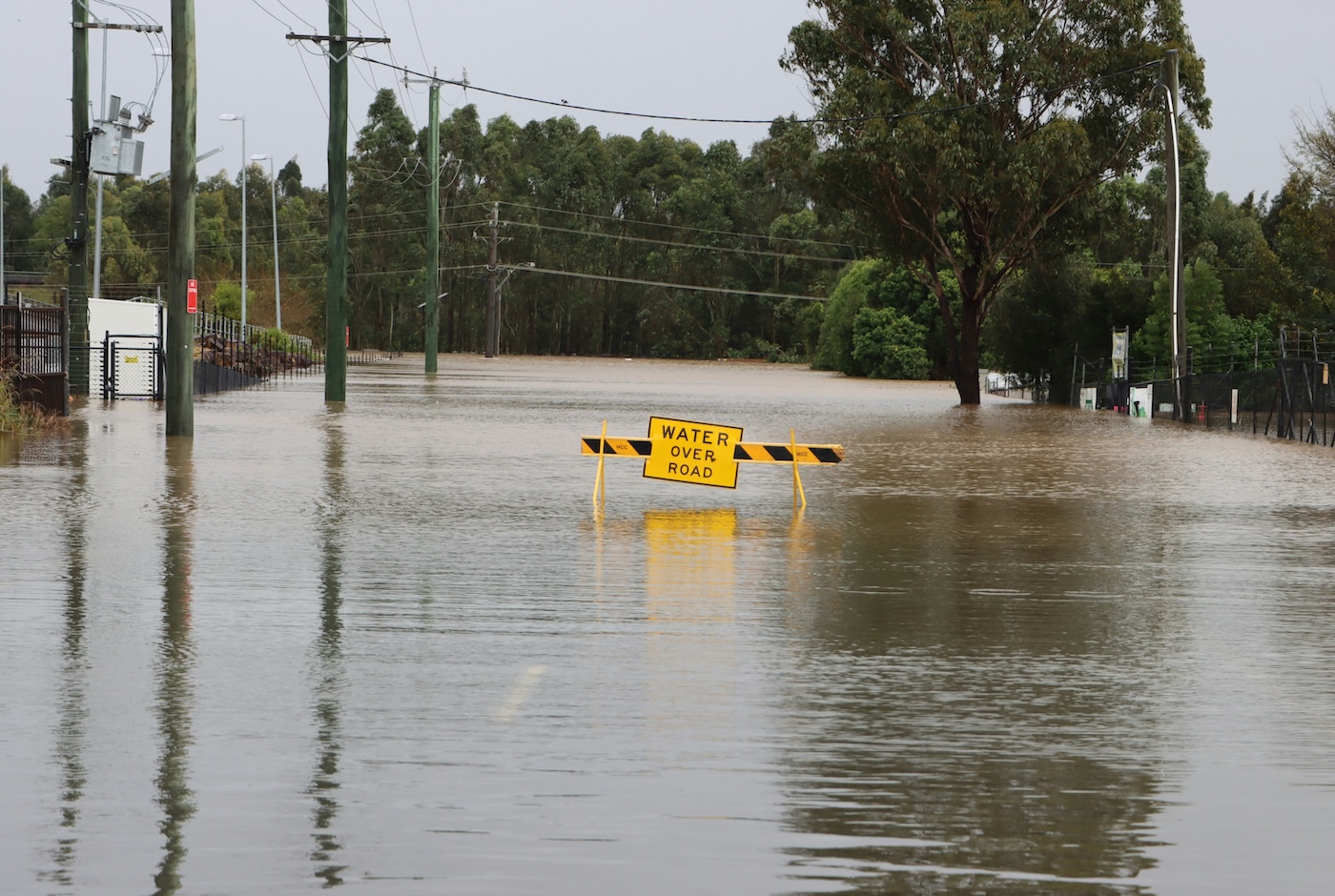
The increase in frequency and intensity of heavy precipitation due to climate change leads to rivers overtopping their banks, surface flooding within urban areas as storm drains fail to handle increased runoff, and flash floods in hilly and arid regions.
The immediate impacts of flooding on physical capital are clear. Destruction of property and infrastructure are a direct economic threat. The second order effects are less obvious but no less pertinent threats. The destruction of a key freight railway may have far broader damage on a region’s economic productivity than the initial flood damage.
The damage to human capital of floods lasts longer than to physical capital. Primary effects of injuries, mortality, and water borne diseases produce a labour supply shock. The secondary effects of disruptions to local healthcare systems and food insecurity due to supply chain failures and food production shortages lead to further impacts on human capital.
Wildfires
Wildfires caused by lightning or human activity are common to forest areas and grasslands. Climate change acts as a multiplier on the destructiveness of these fires due to higher temperatures and prolonged dry spells.
Natural capital is affected due to a loss of biodiversity. Valuable carbon sinks are destroyed, and soil health can be ruined which has knock on effects for future erosion and loss of growth.
Human capital can be affected by loss of life in extreme cases. Respiratory health conditions due to smoke inhalation can also occur even many miles from the flames. This causes long term productivity losses as well as increased healthcare costs.
Physical capital is at risk as larger wildfires jump from forested to urban environments and cause large scale property damage. This can be exacerbated by water scarcity due to chronic drought which would be used for suppression. The January 2025 Los Angeles wildfires illustrate the destruction of physical capital and the impact on the insurance industry.
Hurricanes and tropical storms
Tropical storms represent some of the most concentrated forms of physical risk. While climate change may not significantly increase the frequency of storms, it is increasing the intensity of those storms and the associated risk.
Physical capital destruction in the path of a tropical storm impacts infrastructure and and property directly. The destruction of transport infrastructure such as ports, roads and railway networks has second order effects impacting supply chains with potential global ramifications.
Hurricanes cause immediate human capital shocks due to mortality and injury. The second order effects can be longer running as repeated exposure to intense storms has been shown to suppress regional income growth and lead to brain drain as skilled labour migrates to safer geographies.
Natural capital is at risk due to storm surges which can oversalinate previously farmable land. Storms can also cause the destruction of coastal wetlands which are often vital to reducing the risks of storm surges themselves.
Cold snaps
Climate change is weakening the “Polar vortex” which has historically kept cold Arctic air in Northern regions. As this vortex weakens cold air is released further South and causes severe cold snaps in regions which are not adapted to handle such weather.
In unprepared regions physical capital is vulnerable. Water pipes may burst and energy grids can fail. In the 2021 Texas freeze the power plants were unable to handle peak demand for heating and failed simultaneously under stress.
Human capital is at risk mainly among vulnerable populations such as the elderly. Beyond the primary effects, productivity losses add up due to transportation network failures and closures of schools and businesses due to cold.
Natural capital can be devastated by extreme cold as local plants and wildlife are not adapted to the conditions. The agricultural sector is at risk of losing an entire year’s crop which leads to food price volatility.
Chronic risks
While acute risks are sudden shocks to an environment, chronic risks are long term shifts that increase ongoing stresses and fundamentally alter a region. We will look at how Rising mean temperatures, sea level rise, and ocean acidification impacts physical, human and natural capital.
Rising mean temperatures
Rising mean temperatures represent a steady upward shift in the global baseline. This shift can affect some regions more rapidly than others but it affects all forms of capital.
Human capital is perhaps most affected by rising mean temperatures. Primarily outdoor industries such as construction and agriculture face the largest decline in productivity as heat stress shortens available working hours and migration to cooler climates increases.
Physical capital such as machinery degrades faster in hotter temperatures and infrastructure like asphalt roads have a reduced lifespan which leads to a weakening of supply chains.
As temperatures rise natural capital is at risk as the viability of crops such as vines may decrease therefore rapidly devaluing previously prized land. Biodiversity is also at risk as flora and fauna are unable to adapt to the changing environment and die out.
Sea level rise
As polar ice melts and thermal expansion occurs sea levels rise and cause new risks to our environment.
Coastal property and critical infrastructure can be rendered unusable or unreachable by sea level rise. This physical risk is a slow yet predictable creep which will continue to impact greater areas and harm physical capital without costly adaptation measures.
Human capital is most affected as the risk of climate refugees rises due to forced migration as previously dry areas become uninhabitable.
Ocean acidification
Ocean acidification is caused by the absorption and reaction of CO₂ in seawater. This chronic risk has far reaching effects due to the volume of oceans and our reliance on them.
Natural capital is the primary victim of ocean acidification as microorganisms such as plankton struggle to survive in acidic waters. This leads to a bottom-up ecosystem collapse as the bottom of many food chains is decimated. The reduction in biodiversity is a huge risk for marine food supply chains as well as tourism.
Physical capital is also at risk. Coral reefs often provide vital protection to coastal physical capital such as hotels, residential property and ports. As these reefs are acidified they lose their ability to dissipate wave energy and therefore protect these physical assets. We are also seeing a decrease in the lifespans of submerged physical capital such as deep-sea pipelines and telecommunications equipment.
Human capital is at risk due to dwindling fish stocks as well as a decrease in the marine tourism industry which threatens millions of jobs. This could lead to mass migrations which would have knock on effects on other parts of the world.
Systemic dynamics
Compounding risks
The true threat of climate risks on capital are rarely limited to a singular risk factor but rather the synergy between multiple simultaneous or sequential risks. A region may suffer a prolonged chronic drought which depletes soil quality and human capital, then an acute wildfire could begin which increases the destruction of capital and is exacerbated by the preceding chronic drought.
The non-linearity of climate risk
Traditional economic modelling assumes climate impacts scale linearly with temperature. In reality physical climate risks are defined by thresholds and tipping points. A staple crop like maize might see slightly reduced production as temperatures rise, but once temperatures pass a critical point the crop’s reproductive system fails completely leading to a total crop loss going from a potential 30% reduction in yield to 100% reduction from a 1 degree difference. The same effect applies to physical capital as well. For example a sea wall is 100% effective until the water level is just above it, then its protection drops to zero.
The regressive nature of climate risk
It’s essential to acknowledge that climate risks are inherently regressive. At both macro and micro levels the poor have a higher proportion of their wealth stored in at risk assets. They also have fewer resources to invest in adaptation measures like flood defences. Human capital is also worse affected in lower income areas as labour is often concentrated in sectors with high physical exposure outdoors such as farming or construction.
As climate risks manifest they increase existing inequality due to a cycle of disaster and debt that stunts the growth of human capital.
The bottom line: a new mandate for capital allocation
For decision makers, the increase in physical risks necessitates a change from reactive recovery to proactive resilience. The financial ROI of those shifts is no longer theoretical. It’s reflected in credit ratings, insurance premiums and asset valuations.
- Operational resilience: Supply chains previously driven by efficiency gains must be optimised for resilience against physical risks.
- Cost of Capital: As insurers retreat from high risk areas the cost of financing unmitigated assets will spike.
Businesses that invest in adaptation early will benefit from a lower cost of capital and increased operational resilience as well as protecting against stranded assets.
Conclusion
The transition from viewing climate change as an environmental issue to recognising it as a fundamental financial risk is a key driver to tackling the global climate crisis.
The distinction between acute and chronic risks defines how value is eroded across physical, human, and natural capital and the compounding and non-linear effects of different risks must shape how the global economic system grows and adapts in future. Without quantifying and adapting to these risks we will face an increasingly fragile economy.